


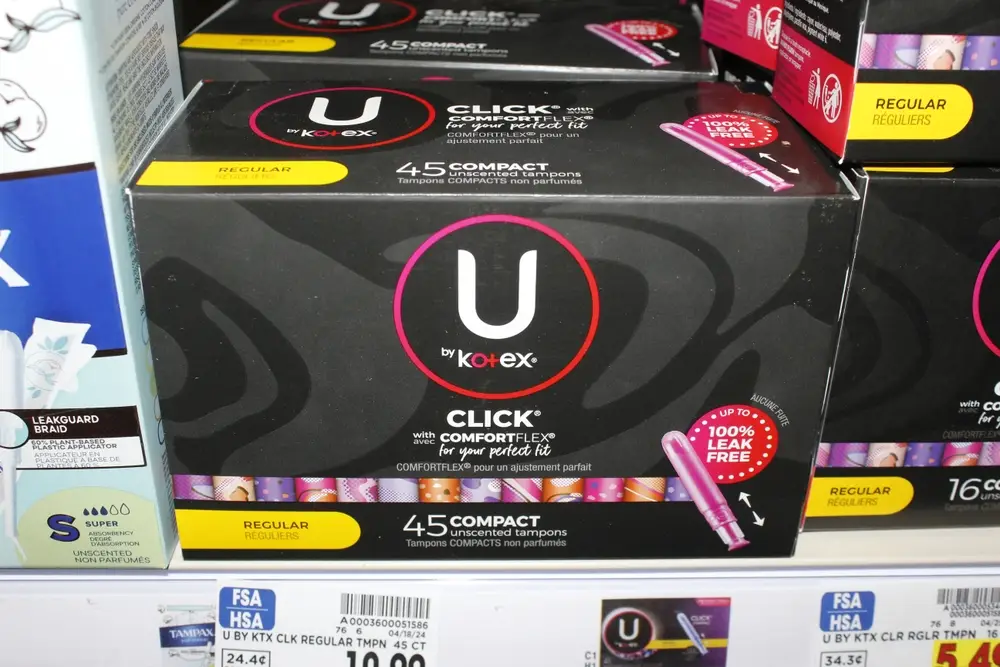
A proposed class action lawsuit has recently put Kimberly-Clark, the maker of U by Kotex Click tampons, under scrutiny. The lawsuit alleges that these popular tampons contain unsafe levels of lead, a heavy metal toxin, and that consumers were not properly warned about the potential risks.
What the Lawsuit Claims
According to the complaint, independent lab testing reportedly found that different sizes of U by Kotex Click tampons contain enough lead that, with typical use, a consumer may exceed California’s Proposition 65 “maximum allowable dose level” for lead. The complaint highlights that tampons are inserted vaginally, which the plaintiffs allege could allow for more direct absorption into the bloodstream compared to oral exposure.
The lawsuit alleges that Kimberly-Clark misled consumers by marketing these tampons as “no harsh ingredients,” “pesticide free,” “elemental chlorine–free rayon,” and “BPA free,” without disclosing the presence of lead. The plaintiff argues that these marketing claims created a false sense of safety for consumers who trusted the brand’s assurances.
Health Risks of Lead Exposure
Lead is a potent toxin with well-documented health risks. The lawsuit highlights possible consequences of lead exposure, including:
- Neurological damage, particularly concerning for reproductive-age individuals
- Kidney harm
- Anemia
- Seizures
- Long-term toxicity affecting multiple organ systems
While the levels in tampons are still being evaluated, even small amounts of lead absorbed over time may pose health concerns, especially for frequent users.
Background on Lead in Menstrual Products
Lead is a heavy metal known for its toxicity and long-term health risks. It can accumulate in the body over time, affecting the nervous system, kidneys, and blood production. While lead is commonly regulated in food, cosmetics, and children’s products, its presence in menstrual products has reportedly raised concerns among public health advocates.
Tampons, in particular, may allow more direct absorption through vaginal tissue compared to oral ingestion, which makes undisclosed contamination a serious concern. This lawsuit highlights the importance of rigorous safety standards and full transparency from manufacturers in products used daily by millions of individuals.
Who is Involved in the Lawsuit
The plaintiff seeks to represent:
- A nationwide class of consumers who purchased U by Kotex Click tampons (excluding California)
- A California-specific subclass for those who purchased the tampons in the state
Claims in the lawsuit include violation of consumer protection laws and failure to warn, including under California’s Proposition 65, which requires businesses to disclose exposure to chemicals known or prone to cause cancer, birth defects, or reproductive harm.
In addition to the main lawsuit, a nonprofit organization called Toxin Free USA filed a related complaint under the D.C. Consumer Protection Procedures Act. Their lab testing reportedly detected lead in compact versions of U by Kotex tampons, further raising questions about product safety.
Legal Context and Related Cases
The Kotex lead lawsuit is part of a broader trend of legal scrutiny over menstrual product safety. Similar claims have emerged regarding heavy metals in other widely used tampons, with plaintiffs arguing that companies mislead consumers by labeling products as “organic,” “chemical-free,” or “safe.”
In addition to the nationwide class action, Toxin Free USA’s complaint under D.C. consumer protection laws cites independent lab results reportedly confirming lead in compact tampons. These cases underscore the growing legal and regulatory pressure on manufacturers to disclose potential toxins and protect consumers from long-term exposure.
Consumer Reactions and Statements
Although Kimberly-Clark has not issued a full statement on the pending class action, consumer advocates and public health organizations are urging users to stay informed about potential exposure to heavy metals in menstrual products. Some affected consumers have expressed surprise and concern, noting that tampons are a product used daily and often with a high degree of trust.
Social media platforms and online forums have amplified these concerns, with some users sharing experiences, questions, and calls for transparency. The growing conversation reflects an increasing awareness among consumers about chemical exposure in everyday products and the demand for stricter safety standards.
What This Means for Tampon Users
For those who have used U by Kotex Click tampons, this lawsuit emphasizes the importance of being aware of product ingredients and potential contaminants. While lead exposure from tampons may not affect everyone equally, individuals with long-term use or preexisting health conditions could face heightened risks.
Consumers concerned about exposure to lead or other heavy metals in menstrual products may consider switching to organic cotton tampons or brands that provide full transparency about ingredient sourcing and safety testing.
Frequently Asked Questions (FAQ)
The lawsuit alleges lead contamination, but the full scope of risk is still under review. Users should weigh potential exposure concerns against their personal health and consult a medical professional if needed.
California’s Proposition 65 requires companies to warn consumers about chemicals that can cause cancer, birth defects, or reproductive harm. The lawsuit claims Kimberly-Clark failed to provide such warnings regarding lead.
The lawsuit specifically mentions U by Kotex Click tampons, including compact sizes tested by independent labs and Toxin Free USA.
The plaintiff seeks to represent a nationwide class of consumers who purchased U by Kotex Click tampons, excluding California, and a California-specific subclass.
Lead exposure may cause neurological damage, kidney harm, anemia, seizures, and other long-term health issues, depending on the amount and frequency of exposure.


Add Comment