


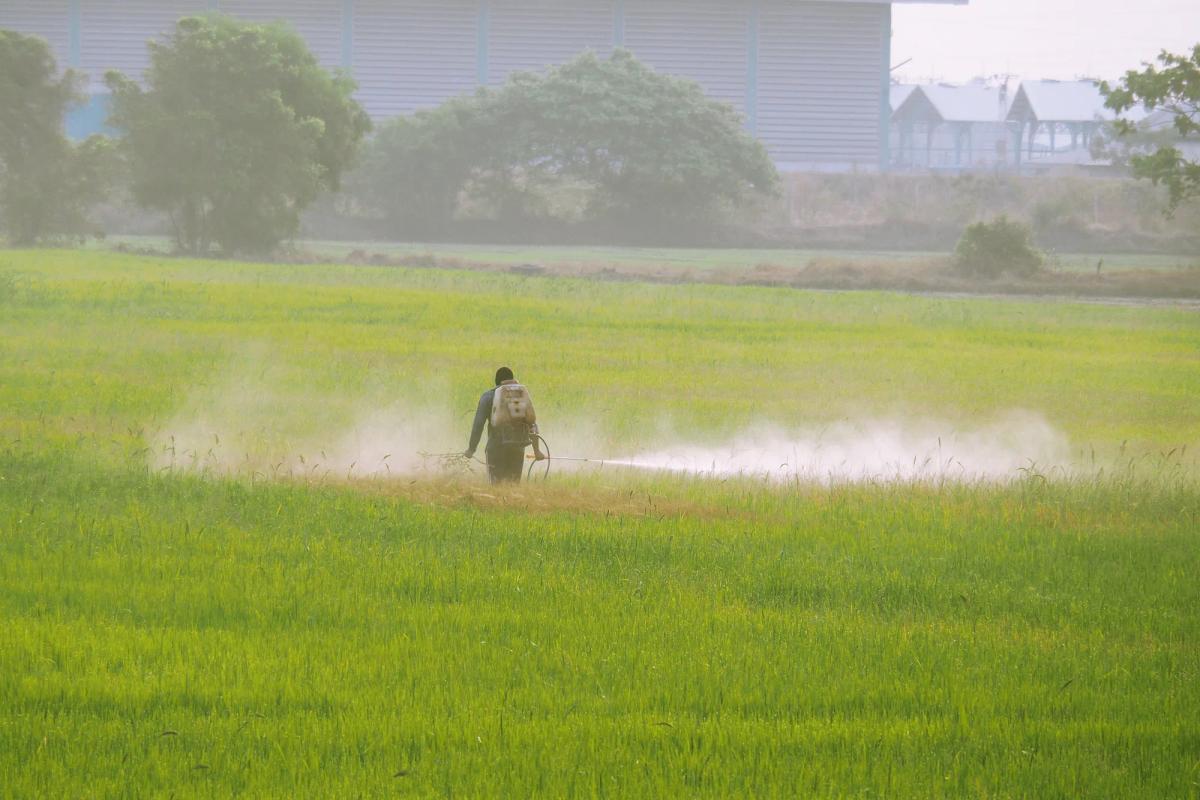


For decades, paraquat has been a staple of American agriculture. It’s fast-acting, inexpensive, and brutally effective at killing weeds. But for a growing number of farmers, vineyard owners, and rural workers, the chemical now carries a far more personal association: Parkinson’s disease.
Across the United States, thousands of people diagnosed with Parkinson’s believe their illness is linked to long-term exposure to paraquat, one of the most toxic herbicides still legally used in American farming. Their stories, increasingly echoed in court filings, medical research, and public policy debates, are forcing a long-overdue reckoning over how the U.S. regulates pesticides that much of the world has already rejected.
The Human Cost Behind the Statistics
Paul Friday spent his life tending a peach orchard in southwestern Michigan. Decades of spraying paraquat were simply part of the job. When his hand began trembling in cold weather, he didn’t immediately suspect the weed killer he had relied on for years.
Eventually, doctors diagnosed Friday with Parkinson’s disease, a progressive neurological disorder that slowly robs people of movement, balance, and independence. For him and thousands like him the diagnosis came without a family history or genetic explanation.
“It explained to me why I have Parkinson’s disease,”
Friday has said, now one of many plaintiffs in pending paraquat litigation.
Stories like his repeat across farming communities in California, Michigan, Ohio, Alabama, and beyond. Farmers, vineyard owners, and even family members exposed indirectly through clothing or proximity describe a shared pattern: years of paraquat use followed by life-altering neurological decline.
What Is Paraquat — and Why Is It So Dangerous?
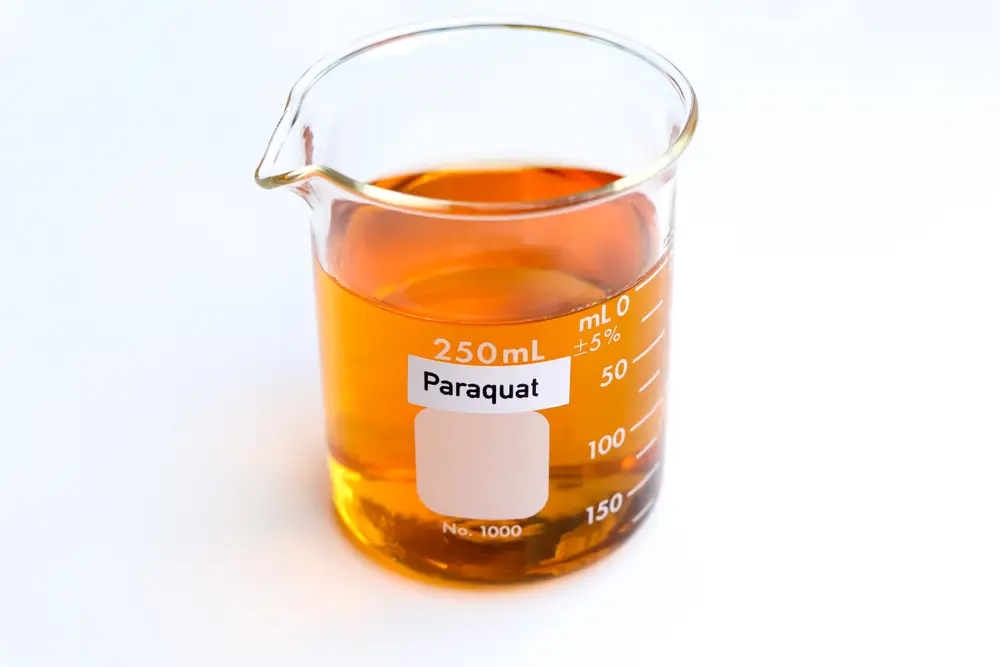
Paraquat is a non-selective herbicide developed in the 1960s and sold primarily under the brand name Gramoxone. It works by destroying plant tissue at the cellular level within hours.
That same potency makes it exceptionally hazardous to humans.
According to the Centers for Disease Control and Prevention (CDC), paraquat poisoning can be fatal even in small amounts. Ingestion, inhalation, or skin exposure can lead to organ failure, respiratory collapse, and death.
Because of its lethality, paraquat is classified as a restricted-use pesticide in the U.S., labeled with a skull and crossbones and allowed only for licensed applicators. It’s dyed blue, given a strong odor, and mixed with an emetic to discourage accidental ingestion, measures critics say underscore how inherently dangerous the chemical is.
The Parkinson’s Link: What the Science Says
Parkinson’s disease occurs when dopamine-producing neurons in the brain die. While genetics play a role in some cases, research increasingly points to environmental exposures as a primary driver.
A major study published in The BMJ projects Parkinson’s to become the fastest-growing neurological disease worldwide, with cases expected to double by 2050.
Source: The BMJ – Parkinson’s Disease Projections
https://www.bmj.com/content/368/bmj.m768
Multiple peer-reviewed studies have examined paraquat’s role:
- A 2011 study found that exposure to paraquat and rotenone increased Parkinson’s risk by 150% among agricultural workers
Source: Environmental Health Perspectives
https://pmc.ncbi.nlm.nih.gov/articles/PMC3114841/
- Research from UCLA and NIH-supported scientists showed paraquat selectively damages dopamine neurons — the same cells lost in Parkinson’s disease
Source: National Institutes of Health
https://pubmed.ncbi.nlm.nih.gov/22172907/
- A California study of 829 Parkinson’s patients found elevated risk among people living or working near paraquat-treated fields
Source: International Journal of Epidemiology
https://academic.oup.com/ije/article/50/4/1160/6270233
Neurologist Dr. Ray Dorsey, a leading Parkinson’s researcher, notes that nearly 87% of Parkinson’s patients have no genetic risk factors, suggesting environmental causes dominate. “For most people,” he says, “Parkinson’s disease comes from the world around us.”
Why Paraquat Is Banned Abroad but Legal in the U.S.
More than 70 countries, including the European Union, the United Kingdom, China, and South Korea, have banned paraquat due to health and suicide risks.
The World Health Organization (WHO) has identified pesticides as one of the most common means of suicide globally, with paraquat frequently cited due to its lethality. Countries that banned it saw sharp declines in suicide deaths.
Source: WHO – Preventing suicide by phasing out highly hazardous pesticides
https://www.who.int/publications/m/item/preventing-suicide-by-phasing-out-highly-hazardous-pesticides
Yet in the U.S., paraquat remains legal. The Environmental Protection Agency (EPA) reauthorized it in 2021, concluding that its agricultural benefits outweighed the risks when used as directed, a decision environmental and farmworker groups have challenged in court.
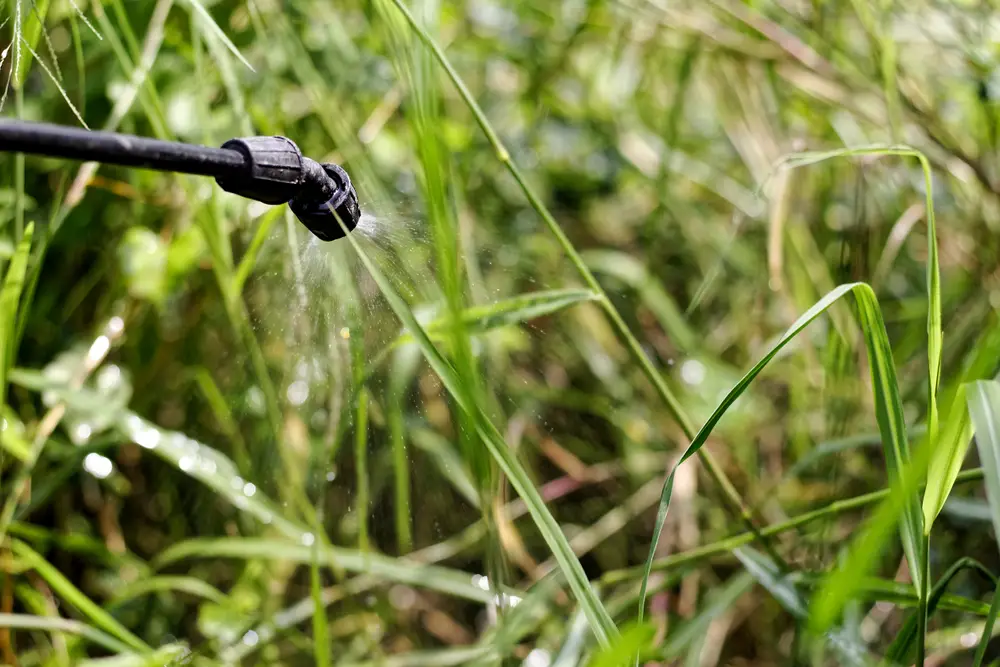
Between 11 and 17 million pounds of paraquat are sprayed annually on U.S. farms, according to the U.S. Geological Survey.
Source: USGS – Estimated Annual Agricultural Pesticide Use
https://water.usgs.gov/nawqa/pnsp/usage/maps/
Lawsuits Mount as Policy Pressure Grows
More than 6,400 federal lawsuits alleging a link between paraquat and Parkinson’s disease are currently consolidated in multidistrict litigation in Illinois, with thousands more filed in state courts.
While manufacturers Syngenta and Chevron deny that paraquat causes Parkinson’s, internal documents released during litigation suggest company scientists were aware decades ago that the chemical could affect the central nervous system.
At the same time, political pressure is building:
- Over 50 U.S. lawmakers have urged the EPA to ban paraquat
- California and Pennsylvania are advancing state-level restrictions
- Environmental groups continue to challenge federal approvals in court
“This is a pivotal time,” said one legal expert. “The question isn’t whether paraquat is dangerous, it’s how long the U.S. will continue to allow its use.”
A National Reckoning in the Making
Nearly 90,000 Americans are diagnosed with Parkinson’s disease each year. As research strengthens the link between environmental exposure and neurological decline, paraquat sits at the center of a broader debate about agricultural safety, corporate accountability, and public health.
For families watching loved ones lose mobility, independence, and quality of life, the issue is no longer abstract.
As one farmer put it:
“If I had known what this stuff could do, I would have found another way.”
What Comes Next
Whether paraquat ultimately faces a U.S. ban remains uncertain. The EPA is conducting further reviews, lawsuits inch toward settlement or trial, and new scientific studies continue to emerge.
What is clear is that paraquat’s future will shape how the nation balances farming efficiency against long-term human health and whether preventable neurological disease will remain the price of doing business.
Those who were regularly exposed to paraquat through agricultural or occupational use and later developed Parkinson’s disease may have legal options available. You can review the latest updates and eligibility criteria related to the ongoing paraquat exposure lawsuit to determine if you may qualify to file a claim.


Add Comment