





What Is Hernia Mesh and Why Are Lawsuits Being Filed?
Hernias occur when tissue, part of the intestine, or even an organ pushes through a weak spot in the surrounding muscle, often creating a visible bulge that worsens when you cough, lift, or strain. While hernias can appear in different areas of the body, they are most commonly found in the groin and abdominal region.
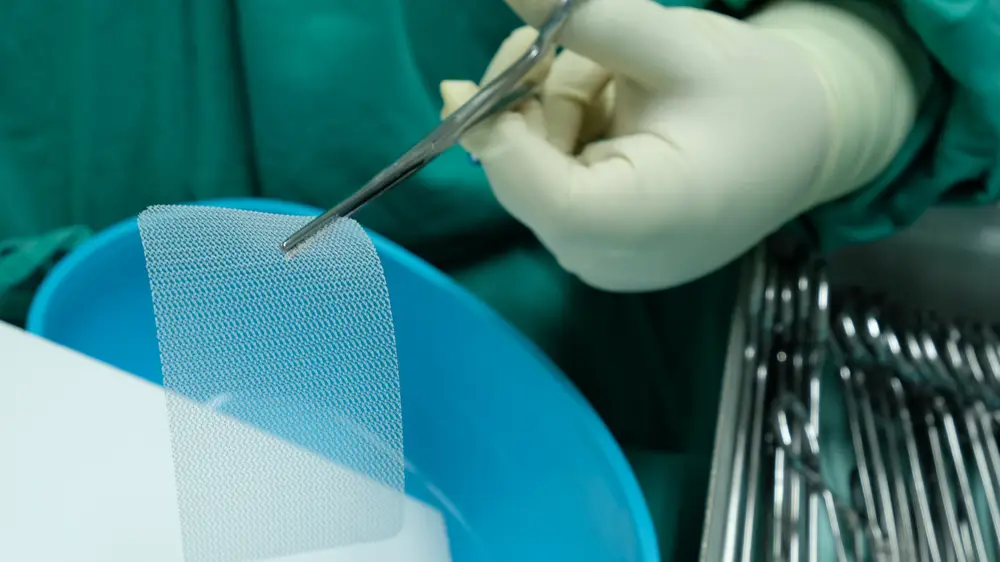
For many patients, surgery is the only long-term solution. During hernia repair whether laparoscopic, open, or robotic surgeons typically push the protruding tissue back into place, stitch the muscle together, and reinforce the area with a surgical mesh patch. This mesh is designed to act like a permanent “internal bandage” that reduces the risk of the hernia coming back.
Surgical hernia mesh can be:
- Synthetic (often polypropylene) or biologic
- Knitted or non-knitted
- Absorbable, non-absorbable, or a combination of both
In theory, mesh should support healing and prevent future complications. In practice, thousands of patients have reported serious injuries after mesh implantation, leading to a wave of hernia mesh lawsuits across the United States.

The Effects of Defective or Failed Hernia Mesh
There are multiple issues that have been noted to arise with the defective hernia meshes used, which cause the victims complications after they’ve already endured surgery for their condition. These complications cost the victims even more money to put right, as well as the stress, worry, and uncertainty of having something so defective inside their bodies.
These inferior mesh structures are made of polypropylene that can oxidize and erode inside the body when in contact with the bloodstream, causing it to shrink and cause inflammation or discomfort. The mesh can also constrict movement in certain areas or even migrate under the surface of the skin and get stuck in the wrong place.
Surgery can fail altogether because the mesh doesn’t do its job and further surgery is required, increasing the risk of infection to the site. In addition to all of these, there’s also the risk of scar-tissue adhesion, intestine obstruction, organ perforation, fistulas, and fluid build-up known as seroma.
Due to the fact so much can go wrong with these mesh implants, it’s no wonder that tens of thousands of people have already made successful lawsuits against the manufacturers.
Who Makes Hernia Mesh and Which Brands Are Being Sued?
There are 4 main manufacturers of hernia mesh who are the subject of current lawsuits: Bard Davol, Atrium, Covidien, and Ethicon. The vast majority of lawsuits, approximately 24,000, are against Bard Davol, who manufactures dozens of types of mesh. It was discovered that many of their mesh products were causing internal injuries to patients, so they began to be recalled almost 20 years ago, in 2005.
Atrium followed suit in 2013 and recalled a handful of their products, including C-Qur, even though it’s believed thousands of them had already been fitted in patients. Covidien found that their Parietex Composite Parastomal mesh was experiencing a high rate of failure and recalled it in 2018, and Ethicon pulled 18,000 of one of their main meshes from the market, too, for the same reason.
Notable Hernia Mesh Lawsuits & Settlements
There are currently well over 26,500 cases of multidistrict legislation against hernia mesh manufacturers, with close to $185m in settlements already paid. 224 defective hernia mesh cases were settled in MDL by Ethicon in December of 2023, and just a month earlier, a Bard hernia mesh victim was awarded $500k in Ohio.
This comes on the heels of another $225k award in Florida, but by far the largest verdict was the $4.8m awarded to a man in Rhode Island in 2022.
How Do Hernia Mesh Lawsuits Work?
Most hernia mesh claims are filed as individual lawsuits that are then grouped into MDLs for efficiency. This allows:
- Shared discovery and expert testimony on mesh safety and design
- Consistent rulings on key scientific and legal issues
- Individual evaluation of each plaintiff’s injuries and damages
In other words, you keep your own case—but benefit from being part of a larger coordinated effort against large device manufacturers.
A typical hernia mesh claim may involve:
- Medical record review – confirming the type of mesh used, date of surgery, and nature of complications.
- Linking the device to your injuries – through operative notes, imaging, and treating physician documentation.
- Calculating damages – including revision surgeries, long-term treatment, lost income, and lifestyle impact.
Because these cases can be complex, many law firms work on a contingency fee basis—you don’t pay legal fees unless they recover money for you.
Do You Qualify for a Hernia Mesh Lawsuit?
You may be a candidate to join the hernia mesh litigation if:
- You had a hernia repaired with surgical mesh (often between 2010 and today).
- You can obtain medical records confirming the type of mesh used and your follow-up treatment.
You later experienced complications such as:
- Chronic abdominal or groin pain
- Infection or abscess near the mesh site
- Hernia recurrence
- Bowel obstruction or perforation
- Mesh migration, shrinkage, or breakage
- Fistulas, adhesions, or open draining wounds
- The need for mesh removal or revision surgery
If this sounds familiar, you may be entitled to compensation. The sooner you speak with a lawyer, the easier it usually is to gather records and preserve your legal rights.
For more details on eligibility, visit the main Hernia Mesh Lawsuit sign-up page on OnlyClassActions and complete a free case qualification request.
Why These Cases Matter
Hernia mesh lawsuits aren’t just about individual compensation, they’re also about changing how powerful device makers do business.
By speaking up, patients have:
- Forced recalls and safety warnings for problematic mesh products
- Brought more public attention to the risks of certain devices
- Helped push for better testing, clearer labeling, and stronger oversight
Every case is different, and you should seek legal consultation to understand your claim and potential recoverable damages. The values of settlements are provided for illustration only, and do not imply that your claim will prevail or result in similar damages or a settlement.
It’s clear that the law is on the side of those who have been the victims of hernia mesh, whether it’s due to a defective design or manufacturer, ineffective labeling that didn’t highlight the risks, or even medical malpractice by the doctors when using the products.
The damages being sued for are due to the suffering and pain caused by the hernia mesh implants, which in turn meant they were unable to work and earn a living. High medical bills to rectify the problem are also brought into consideration alongside the effect it has had on their quality of life. The issues caused by the hernia implants are not short-term, and sadly, many of the patients cannot even have revision surgery in an attempt to solve the problem.


Add Comment